


Philippines Digital Nomad Visa: Official Launch and Eligibility Watch

The Philippines has an official legal framework for a digital nomad visa, but travelers should separate that fact from a verified application launch. Executive Order No. 86 authorized the Department of Foreign Affairs to issue the visa in April 2025. As of September 27, 2026, the live production Philippine eVisa policy page did not list a digital nomad visa category, fee schedule or application checklist. We therefore could not verify that ordinary applicants can complete a production application today.
This article explains what the executive order confirms, what remains operationally unverified and how to check status without relying on unofficial visa sellers.
Current status in one paragraph
Executive Order No. 86 is real and remains the core official authority. It defines the intended applicant profile and directs agencies to create implementing guidelines and a pilot. The government’s live eVisa portal is also operational for other visa categories. However, the production policy page checked on September 27, 2026 lists temporary visitor categories and visa-free rules without displaying the digital nomad visa. A staging policy page has shown a 47(a)(2) digital nomad category, but a staging environment is not sufficient evidence that applications are open to the public.
The careful conclusion is: the framework exists, but general operational availability could not be confirmed from the live production portal.
What Executive Order No. 86 confirms
The order authorizes the Department of Foreign Affairs to issue digital nomad visas to non-immigrant foreigners who want to stay temporarily while working remotely for clients or employers outside the Philippines.
It states that an applicant must:
- be at least 18 years old;
- show proof of remote work using digital technology;
- show sufficient income generated outside the Philippines;
- show no criminal record;
- hold health insurance valid for the visa period;
- be a national of a country that offers a digital nomad visa to Filipinos and has a Philippine Foreign Service Post;
- pose no threat to Philippine security; and
- not take employment in the Philippines.
These are framework conditions, not a complete application checklist. The order does not publish a numeric income threshold, a fee, a standard processing time or a public list of reciprocal countries.
Intended validity and renewal
Executive Order No. 86 says a valid digital nomad visa may permit entry and/or stay for up to one year. It also contemplates renewal for the same duration and multiple-entry privileges during validity.
Those headline terms still depend on the implementing procedure and the applicant’s issued visa. Do not book a one-year stay or assume multiple entry until the issuing Foreign Service Post confirms the current process and places the terms in writing.
Why the production portal matters
The Department of Foreign Affairs operates the eVisa portal, while the Bureau of Immigration controls admission and immigration enforcement. The live production portal’s policy page is the public reference for categories it currently explains.
When checked on September 27, 2026, that page did not display a 47(a)(2) digital nomad visa section. The portal did show the existing non-immigrant visitor categories, visa-free country rules and current eVisa guidance. Its absence does not repeal the executive order, but it prevents us from treating the online application route as publicly confirmed.
A staging version of the eVisa site has displayed a digital nomad policy page and described documentary requirements. Staging systems are used for testing and can contain incomplete or unpublished material. Applicants should not submit personal documents, fees or travel plans based on a staging page.
What remains unverified
We did not find a complete, current production source confirming all of the following:
- the list of nationalities that satisfy reciprocity;
- which embassies or consulates currently accept applications;
- the final documentary checklist;
- the numeric income requirement and acceptable evidence period;
- the DFA and Department of Justice fee amounts;
- normal processing time;
- whether the application is fully online, in person or hybrid;
- rules for dependants;
- renewal timing and location; or
- a general launch date for all eligible applicants.
These details should remain blank rather than filled from commercial immigration blogs.
How to verify eligibility before applying
Use this order:
- Check the Philippine eVisa policy page for a live digital nomad category.
- Contact the Philippine embassy or consulate responsible for your country of nationality or legal residence.
- Ask whether your nationality meets the reciprocal-country condition.
- Request the current checklist, fee schedule, payment method and processing estimate directly from the post.
- Confirm whether the post accepts online applications, appointments or both.
- Do not send passport scans or payment to an unofficial agent until the post confirms the route.
The executive order allows a national of a reciprocal country without a Philippine Foreign Service Post to apply in the nearest country with a post, subject to implementing guidelines. Confirm which post has jurisdiction before traveling for an appointment.
Income, insurance and criminal-record evidence
The order requires sufficient foreign-source income, valid health insurance and proof of no criminal record. It does not define one public numeric threshold. Until the DFA publishes or confirms the current figure, any exact amount would be speculation.
Likewise, the executive order does not specify which bank statements, contracts, payslips or police certificates every post will accept. Ask the issuing post whether documents require originals, apostilles, translations or a particular validity period.
Health insurance must be valid for the DNV period under the order. Confirm geographic coverage, effective dates and certificate wording with the post. A travel-insurance marketing page is not a substitute for the official requirement.
Local employment and remote work
The framework is designed for work performed remotely for overseas employers or clients. It expressly says applicants must not be employed in the Philippines. A digital nomad visa should not be read as permission to join a Philippine payroll, provide services to a local employer or practice a regulated profession.
If your arrangement includes a Philippine entity, local clients or on-the-ground work, obtain advice from the responsible government office or a qualified immigration professional before relying on the DNV framework.
Tax questions are separate
Executive Order No. 86 does not provide a universal tax exemption. Immigration status, tax residence, source-of-income rules and treaty treatment are different legal questions. Time in the country, employer structure and where work is performed can matter.
Do not assume that holding or applying for a DNV determines your Philippine tax position. Obtain current advice for your facts from a qualified tax professional and verify any official guidance from the Bureau of Internal Revenue.
Can you use a tourist entry instead?
Visa-free entry and temporary visitor visas have their own permitted purposes, stay periods and extension rules. The production eVisa portal says eVisas are not automatically convertible to other categories and that admission remains subject to immigration control at the port of entry.
Do not treat tourist admission as a substitute for a work-authorized status. Ask the appropriate Philippine Foreign Service Post and the Bureau of Immigration which status applies to your intended activities.
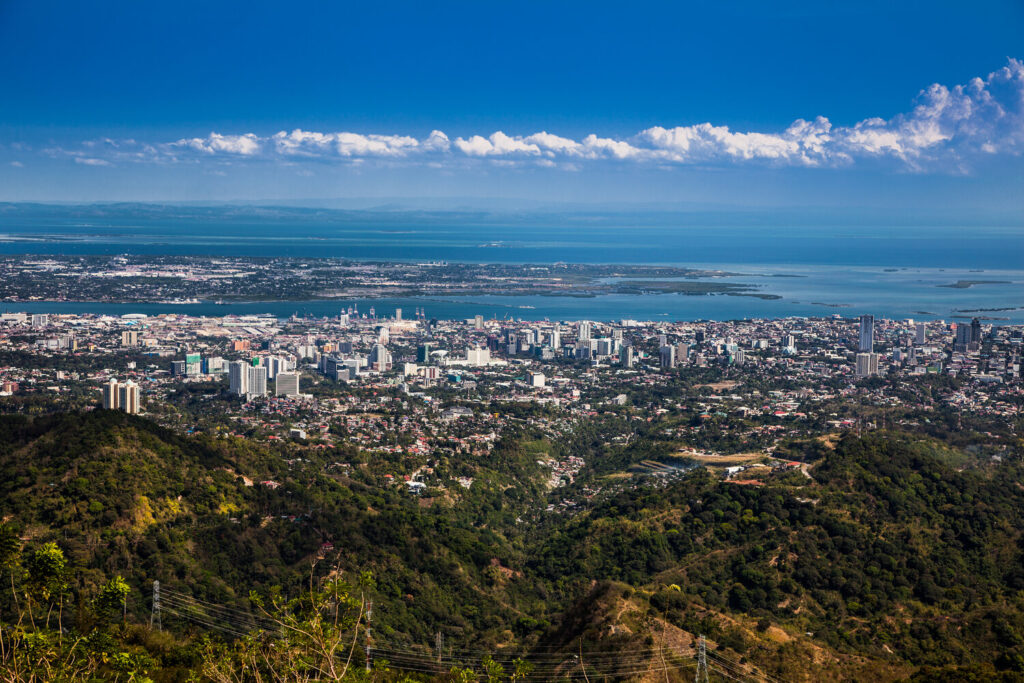
For destination planning after status is confirmed, our Cebu digital nomad guide covers local living considerations. It is not an immigration source.
Avoid common application traps
- A government announcement is not the same as a live application route.
- A staging portal is not a production application page.
- A commercial checklist is not an official checklist.
- “Sufficient income” is not permission to invent a threshold.
- A visa framework does not guarantee admission at the border.
- A one-year maximum does not guarantee every applicant receives one year.
- Remote work for overseas clients does not authorize Philippine employment.
Bottom line
The Philippines has formally authorized a digital nomad visa through Executive Order No. 86. The order confirms the intended remote-worker profile, core conditions and a maximum one-year framework. Yet the live production eVisa policy page checked on September 27, 2026 did not list the category, so a general public application launch could not be verified.
Prospective applicants should wait for a production portal entry or written confirmation from the responsible Philippine Foreign Service Post. Recheck the live sources immediately before paying fees or making non-refundable travel plans.



Responses