

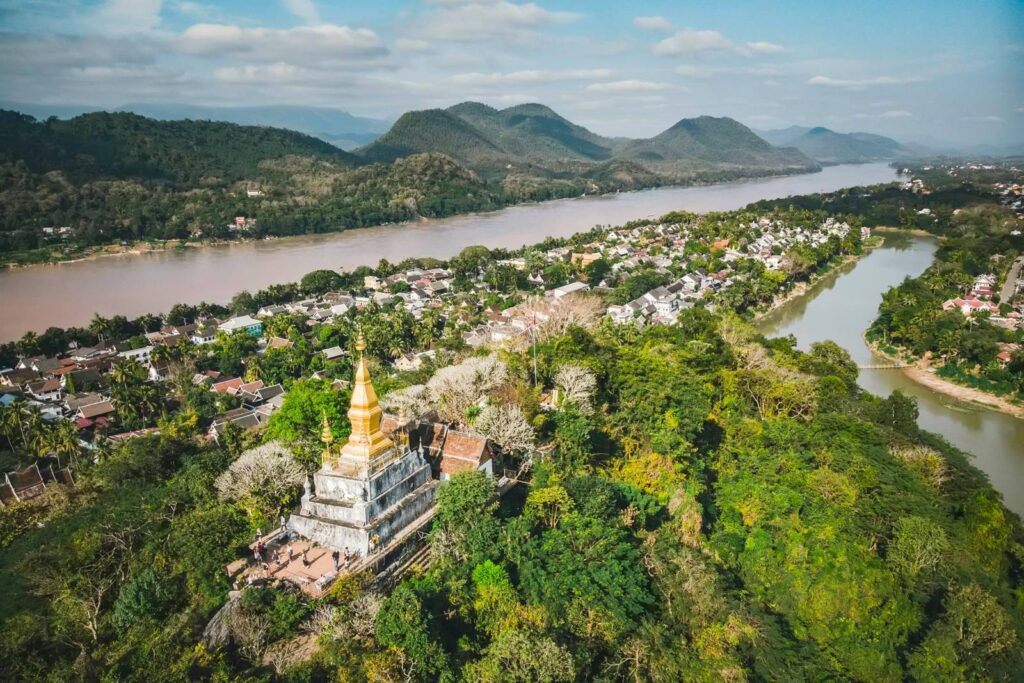
Luang Prabang, Laos

A Digital Nomad Guide to Luang Prabang
Fact-checked: October 29, 2026. Luang Prabang suits remote workers who value a slow rhythm, compact streets and early mornings more than a large coworking scene. This UNESCO-listed city in northern Laos offers temples, markets, river scenery and access to waterfalls, but it is a small leisure destination rather than a mature work hub.
This guide uses current Lao government, tourism, transport, accommodation and exchange-rate evidence. Prices are planning allowances, not promises. Short-stay inventory, rail tickets and venue hours can change quickly, especially around festivals and the November-to-February high season.
Monthly budget: 29,100,000 LAK
The ratings are qualitative editorial assessments based on the evidence in this guide. They are not survey results or measured scores.
Luang Prabang quick facts
- Best for: quiet routines, culture, nature and focused work weeks.
- Main limitations: thin coworking inventory, seasonal smoke, fewer specialist services and uneven home internet.
- Airport: Luang Prabang International Airport.
- Rail: the Laos-China Railway connects the city with Vientiane, Vang Vieng and northern stops.
- Currency: Lao kip (LAK). This budget uses the Bank of the Lao P.D.R. reference rate of 22,430 LAK per US dollar published on October 28, 2026.
- Time zone: Indochina Time, UTC+7.
Is Luang Prabang good for digital nomads?
It can be, provided your job tolerates the realities of a small city. Luang Prabang is walkable in its heritage core, visually distinctive and calmer than regional capitals. A month can support deep work, language study and weekend excursions. The trade-off is redundancy: there may not be another suitable desk, fibre line or repair shop around the corner when something fails.
Do not book a full month on photographs alone. Ask a host for a current router speed test from the exact room, confirm whether the line is shared, and check desk height, chair support, power outlets and backup power. Keep a local SIM with a generous data allowance as a second connection.
Internet, cafes and coworking
Public listings show cafes that welcome laptops, but we could not verify a stable citywide coworking network or a current official monthly coworking tariff. Treat a dedicated workspace as a bonus, not a foundation. For calls and confidential work, a quiet private room with tested internet is safer than depending on a cafe.
Run tests at the same hour as your normal meetings. A good morning result does not guarantee evening stability. If you use cloud backups or large media files, test upload speed and latency as well as download speed. Bring a compact power bank, universal adapter and wired earbuds.
Best areas to stay
Historic peninsula
The peninsula puts temples, the night market and river walks close by. It is atmospheric and convenient, but heritage buildings can have small rooms, limited soundproofing and less flexible work furniture. New traffic controls restrict some vans, passenger vehicles, tuk-tuks, motorcycles and parking in parts of the heritage zone, so confirm the exact drop-off point with your host.
South of the old town
Staying a little south of the peninsula can mean more residential streets, easier vehicle access and better value. It is practical for a longer stay if you are willing to walk or cycle into the historic centre.
Across the rivers and outer districts
Outer areas can feel quieter and offer more space, but bridge crossings and late-evening transport matter. Confirm the route after dark and do not assume every map pin is walkable in all weather.
Housing, cheap stays and lease reality
Our model assigns 13.5 million LAK to a furnished 30-night private stay. Current public evidence checked on October 29 included central furnished apartments advertised at US$270 to US$280 per month, a one-month serviced apartment at US$550, and higher short-stay inventory. These are individual asking prices with different terms, not a city average. The US$600 allowance leaves room for flexible dates, utilities, platform fees and high-season pressure.
- Request a same-day speed test from the room and ask how many units share the line.
- Confirm a real table and chair, not only a low decorative table.
- Check air-conditioning, ventilation, mosquito screens and hot-water reliability.
- Ask whether electricity, cleaning, drinking water and internet are included.
- Read the deposit, cancellation and guest rules before paying.
Visa and legal considerations
Laos’ official eVisa portal states that its eVisa is a single-entry tourist visa. The stay permit is 30 days and the approval letter is valid for a maximum of 60 days. Eligibility, entry points and passport conditions are nationality-specific. The official FAQ also says applicants need more than 180 days of passport validity on arrival and must print the approval letter.
Use only the official Lao eVisa website and its FAQ. A tourist eVisa is not work authorisation. Remote workers should obtain qualified advice on immigration, tax and employment rules for their own citizenship, employer and length of stay.
Getting to and around Luang Prabang
The Laos-China Railway has made the city easier to reach from Vientiane and Vang Vieng. Departure times, official sales channels and baggage rules should be checked close to travel. The railway station is outside the historic centre, so include a transfer in your arrival plan.
Within town, walking and cycling cover many daily trips. Tuk-tuks and local vehicles handle longer journeys, but agree on the price and exact destination before departure. Official tourism updates in February and March 2026 introduced tighter vehicle access and parking rules in the heritage area, so pick-up points may differ from older guides.
Food, nightlife and everyday life
Markets, noodle shops, bakeries and Lao restaurants make it easy to mix inexpensive local meals with occasional international food. Use busy stalls with good turnover, drink sealed or properly filtered water and wash produce. A kitchen is useful for breakfast and workdays when rain or heat makes another trip inconvenient.
The city winds down earlier than Bangkok or Chiang Mai. That is part of its appeal for focused work, but late-night food delivery and 24-hour services are limited. Keep basic snacks, medicine and water in your room.
Climate and the best season
The cooler, drier months from roughly November to February are the easiest for walking and outdoor work breaks, and they are also popular. The hot season becomes intense, while the wet season brings humidity and heavy showers. Smoke and regional burning can degrade air quality in the late dry season. Check current air-quality data before committing to March or April and keep the booking flexible if you are sensitive to pollution.
Things to do away from the laptop
- Walk the historic centre respectfully and visit temples outside peak tour hours.
- Plan a day trip to Kuang Si Waterfall with a licensed operator or agreed transfer.
- Cross the Mekong for village scenery, allowing extra time for transport changes.
- Visit the night market and local food stalls without blocking narrow streets.
- Use free mornings for river walks and reserve midday heat for indoor work.
Families, health, fitness and insurance
Families may enjoy the compact centre and nature, but should research schooling, paediatric care and road safety before a long stay. Specialist medical services are limited compared with a capital. Carry suitable travel or international health insurance and understand its evacuation terms.
Walking, cycling, hotel pools and simple gyms can support a routine. Heat, rain and air quality may make outdoor exercise impractical at times. Our digital nomad insurance guide explains how to compare medical, evacuation and activity cover.
Community, jobs and remote-work routine
Luang Prabang’s nomad community is smaller and more transient than Chiang Mai’s. Meetups may be informal rather than scheduled every week. A dependable routine is simple: do bandwidth-heavy work from your tested room, use cafes for lighter tasks and keep calls within agreed quiet hours.
Plan around remote income you already have. Do not assume tourist status permits local paid work. If you are looking for location-independent roles, browse the Digital Nomad World job board before arrival.
Monthly budget for one remote worker
This planning budget is for one person staying 30 nights in a furnished private studio or guesthouse room, eating mostly local food, using cafes selectively and taking occasional day trips. It excludes flights, visa fees, deposits, major medical costs and tax. The 29.1 million LAK total is approximately US$1,297 per month, rounded using the Bank of the Lao P.D.R. reference rate of 22,430 LAK per US dollar on October 28, 2026. Exchange providers may use different rates and fees.
| Category | Monthly allowance | Approx. USD |
|---|---|---|
| Accommodation | 13,500,000 LAK | $602 |
| Utilities and home internet | 1,200,000 LAK | $54 |
| Food and groceries | 5,400,000 LAK | $241 |
| Local transport | 1,350,000 LAK | $60 |
| Workspace and cafes | 1,800,000 LAK | $80 |
| Phone and data | 450,000 LAK | $20 |
| Health and fitness | 900,000 LAK | $40 |
| Leisure and day trips | 1,800,000 LAK | $80 |
| Insurance | 2,700,000 LAK | $120 |
| Total | 29,100,000 LAK | $1,297 |
Who should choose Luang Prabang?
Choose it for a deliberate month of quiet work, culture and nature. Skip it if you need multiple coworking choices, late-night services, frequent specialist healthcare or guaranteed enterprise-grade connectivity. For a larger regional base with a deeper remote-work ecosystem, compare our Chiang Mai digital nomad guide.
Sources and methodology
Checked October 29, 2026: Lao eVisa, official eVisa FAQ, Tourism Laos, the official February and March 2026 heritage-zone traffic updates, the Bank of the Lao P.D.R. exchange-rate page, UL.la rental listings and Zen Residence’s published one-month rate. Accommodation and other living-cost numbers are transparent editorial allowances, not survey averages. No housing, workspace, connection speed or transport service was hands-on tested.


Responses