

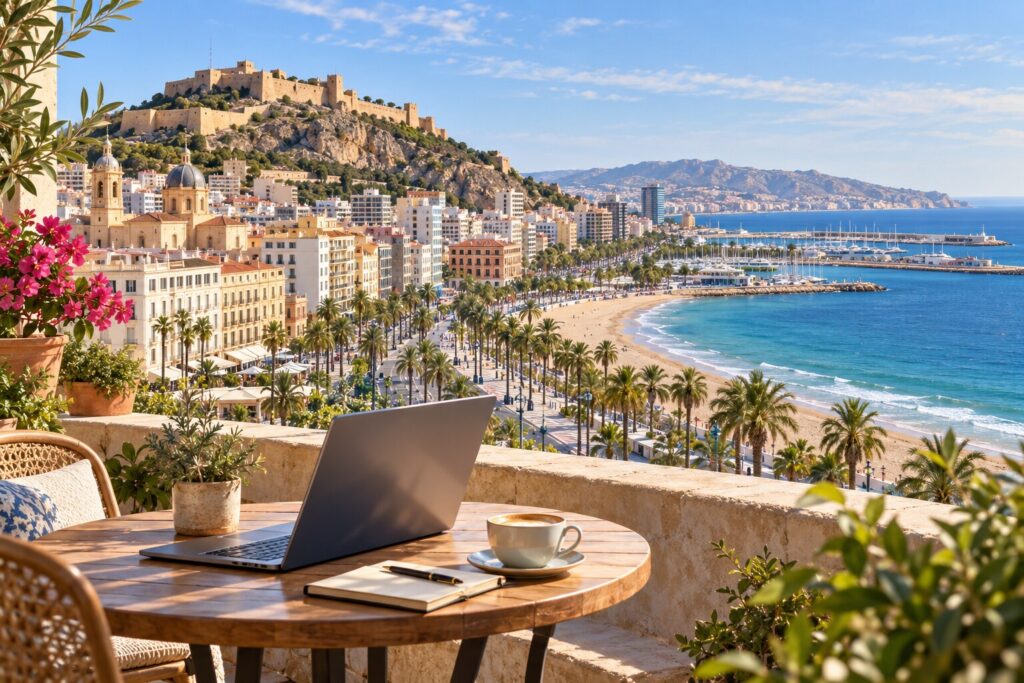
Alicante, Spain: Digital Nomad Guide

Alicante combines a compact Mediterranean city center, an urban beach, rail links and a lower-intensity daily rhythm than Spain’s biggest digital-nomad hubs. It can work particularly well for remote workers who want mild winters, walkable routines and access to coworking without building their stay around nightlife.
This guide uses official transport and visa sources plus live accommodation and coworking listings checked on September 26, 2026. Prices are examples rather than guarantees, and the monthly budget is an explicit planning scenario—not a citywide average.
Alicante at a glance
- Best for: Mediterranean weather, a compact center, beach access and a quieter base than Madrid or Barcelona.
- Main trade-offs: A smaller professional network, intense summer heat and seasonal accommodation pressure.
- Airport connection: C6 bus between Alicante Airport and the city center.
- Coworking example: ULab lists a full coworking plan at €183 plus VAT per month.
- Illustrative solo budget: €2,480 per month for a furnished private apartment and paid coworking.
- Suggested first stay: One month, with flexibility to test the neighborhood before committing longer.
Why remote workers choose Alicante
Alicante’s appeal is practical rather than spectacular. The historic center, Mercado area, waterfront and central rail station sit within a manageable urban footprint. Many daily trips can be made on foot, while local buses and the TRAM connect outlying residential areas, beaches and nearby towns.
The city offers enough coworking, cafés and services for a stable work routine without the scale or constant movement of a major capital. Winter is a particular strength: daylight and mild daytime conditions can make Alicante attractive when colder European bases are less comfortable. Summer brings the opposite calculation, with heat, crowds and higher seasonal demand near the coast.
For a broader national comparison, see our digital nomad guide to Spain and Barcelona digital nomad guide.
Best neighborhoods for digital nomads
Centro and Mercado
Centro and the streets around Mercado Central suit first-time visitors who want to walk to shops, restaurants, coworking and transport. The location reduces everyday friction, especially for a short stay without a car. The trade-offs are street noise, older buildings and higher demand for well-renovated apartments.
Ensanche-Diputación
This central grid between the station, shopping streets and waterfront is practical for rail users and people who prefer a conventional city neighborhood. It gives easy access to the center without putting every evening on the busiest old-town streets. Compare insulation and air-conditioning carefully, because building quality varies.
Carolinas and Pla del Bon Repòs
These areas can offer a more residential routine and may stretch an accommodation budget further than the waterfront. They are less postcard-like but still reasonably close to central services. Check the exact walking route, bus connection and nighttime street environment for each listing rather than judging the whole district from a map.
Playa de San Juan
Playa de San Juan is the beach-first option. TRAM lines 4 and 5 connect the area with central Alicante, according to the city’s official tourism information. It can suit remote workers who prioritize space, sea access and a residential setting, but the commute is longer and the neighborhood feels more seasonal.
Casco Antiguo and Santa Cruz
The old town is atmospheric and central, with steep streets beneath Santa Bárbara Castle. It is better for travelers who value character and nightlife access than for anyone needing silence, elevators or simple luggage logistics. Inspect access, noise and building condition before booking a long stay.
Accommodation and realistic monthly rent samples
Short-term furnished rent varies by season, location, utilities and contract length. Live listings checked on September 26, 2026 showed the range clearly:
- HousingAnywhere examples included furnished apartments around €920–€950 per month at the lower end, with some utilities included, and additional examples from roughly €1,150 to €1,650.
- Idealista included a one-bedroom listing at €1,200 per month available from September 2026, alongside short-term examples around €1,200–€1,500.
These are listing snapshots, not a median rent. The advertised monthly figure may exclude platform fees, deposits, utilities, cleaning or seasonal supplements. Ask for the total amount for your exact dates and request a written list of inclusions before paying.
For stays longer than a holiday rental, compare direct local listings with platforms such as HousingAnywhere, Spotahome and Flatio. Our guide to the best websites for monthly rentals explains the trade-offs between furnished apartment sites, coliving and conventional listings.
Coworking and remote-work setup
ULab is one centrally located benchmark. Its current website lists full coworking at €183 plus VAT per month, with a fixed desk, access Monday to Friday from 8:00 to 20:30, small meeting rooms and eight hours per month in larger meeting rooms. Confirm availability and final VAT-inclusive pricing before arrival.
Alicante also has flexible offices and smaller coworking operators. When comparing them, ask about:
- whether the desk is fixed or hot-desked;
- access hours and weekend availability;
- phone booths and call rules;
- included meeting-room hours;
- monitor availability;
- air-conditioning in summer; and
- the exact internet backup arrangement.
A café can cover an occasional email session, but it is a poor substitute for a reliable workspace during video-heavy weeks. Use coworking for focused work and reserve cafés for short, low-impact sessions when the venue is comfortable with laptops.
Internet and mobile connectivity
Spain has extensive fiber and mobile networks, but a citywide claim does not guarantee a particular apartment. Ask a host for a recent speed test taken inside the exact unit and confirm whether the router is shared. Thick walls and interior rooms can weaken Wi-Fi even when the building has fast service.
Keep a mobile data plan as a fallback. Before a critical call, test both Wi-Fi and cellular reception from the desk you will actually use. If your work depends on uploads or live production, choose coworking with a documented backup connection rather than relying on accommodation marketing.
Getting around Alicante
The city’s official tourism site lists a base urban bus fare of €1.45. It also says the C6 airport bus connects the airport with downtown, the Renfe station, Luceros and Puerta del Mar. The airport is about 12 kilometers from the city, and the current C6 single ticket is €4.70; a 10-trip product is listed at €8.10.
Official TRAM information describes these useful routes:
- Line 1: Luceros–Benidorm;
- Line 2: Luceros–University of Alicante/Sant Vicent del Raspeig;
- Line 3: Luceros–El Campello;
- Line 4: Luceros–Playa de San Juan; and
- Line 5: Puerta del Mar–Playa de San Juan.
Temporary public-transport discounts have been extended through December 31, 2026, according to official fare notices. Because promotions and pass rules change, verify the ticket that fits your actual travel pattern rather than assuming a past discount remains in force.
A car is unnecessary for most central routines. It becomes useful mainly for regional trips where public transport is slow. Parking and narrow streets make it a liability in the old center.
Food, groceries and daily life
Mercado Central is a useful anchor for fresh food and everyday shopping. National supermarkets and neighborhood stores cover routine groceries, while the center and waterfront offer a wide restaurant range. A home-cooking budget will be much lower than an eating-out routine near the marina or tourist streets.
For focused workdays, choose accommodation within an easy walk of groceries, a gym and either coworking or a reliable bus/TRAM stop. Alicante is compact enough that a well-chosen address can eliminate many paid trips.
Weather and the best time to stay
Winter is the most distinctive season for remote workers: conditions are generally milder than in northern Europe, while the city operates normally outside the summer peak. Spring and autumn balance outdoor comfort with fewer extremes.
Summer can be hot, bright and busy. Air-conditioning, exterior noise and shading become more important than an apartment’s decorative features. Near the beach, availability and pricing may change sharply around holiday periods. If you plan to stay through July or August, secure a workspace and confirm electricity terms before signing.
Visas and legal stay
EU/EEA and Swiss citizens follow freedom-of-movement rules, while other nationals need to match their stay and work circumstances to the correct Spanish immigration route. Spain has an international telework or digital-nomad framework, but eligibility, documentation and application location depend on the applicant’s circumstances.
Use an official Spanish consular telework visa page and the competent authority for your residence when checking current requirements. Do not rely on a city guide as legal advice. Tax residence, social security and local registration can involve separate tests, so seek qualified advice for a long stay.
Illustrative monthly budget
The following scenario assumes one person renting a furnished private apartment, paying for coworking, cooking regularly and using public transport. It is designed for planning, not presented as Alicante’s average cost.
| Category | Monthly amount |
|---|---|
| Housing | €1,200 |
| Utilities and home internet | €180 |
| Coworking | €220 |
| Groceries | €350 |
| Dining and leisure | €250 |
| Local transport | €60 |
| Mobile service | €25 |
| Fitness and health | €75 |
| Insurance and miscellaneous | €120 |
| Total | €2,480 |
Housing is the most volatile line. The coworking amount rounds above ULab’s listed €183 plus VAT and leaves a small buffer. A shared apartment or neighborhood farther from the waterfront could reduce the total, while a summer beachfront rental and frequent restaurant meals could raise it substantially.
Practical arrival checklist
- Confirm the total accommodation cost, deposit, cancellation terms and included utilities.
- Request a recent speed test from the exact apartment.
- Check walking time to groceries, coworking and your preferred transport stop.
- Buy the transport product that matches your actual trips after confirming current fares.
- Test your backup mobile connection before the first important call.
- Review official immigration and tax information for your personal circumstances.
- Reassess the neighborhood after two weeks before committing to a longer lease.
Is Alicante a good digital-nomad base?
Alicante is a strong option for remote workers who want Mediterranean access, a compact daily routine and a calmer scale than Spain’s largest hubs. It is especially attractive outside peak summer, when mild conditions and normal city life align.
It is less suitable for someone who needs a very large startup network, round-the-clock big-city culture or the cheapest possible coastal rent. Treat the first month as a trial, verify the actual apartment and workspace rather than relying on citywide averages, and build a budget around your season and neighborhood.
Sources checked
Alicante Monthly Budget: EUR 2,480 (Illustrative)
One adult, one month. Planning allowances, not live quotes. See assumptions and exclusions.



Responses