

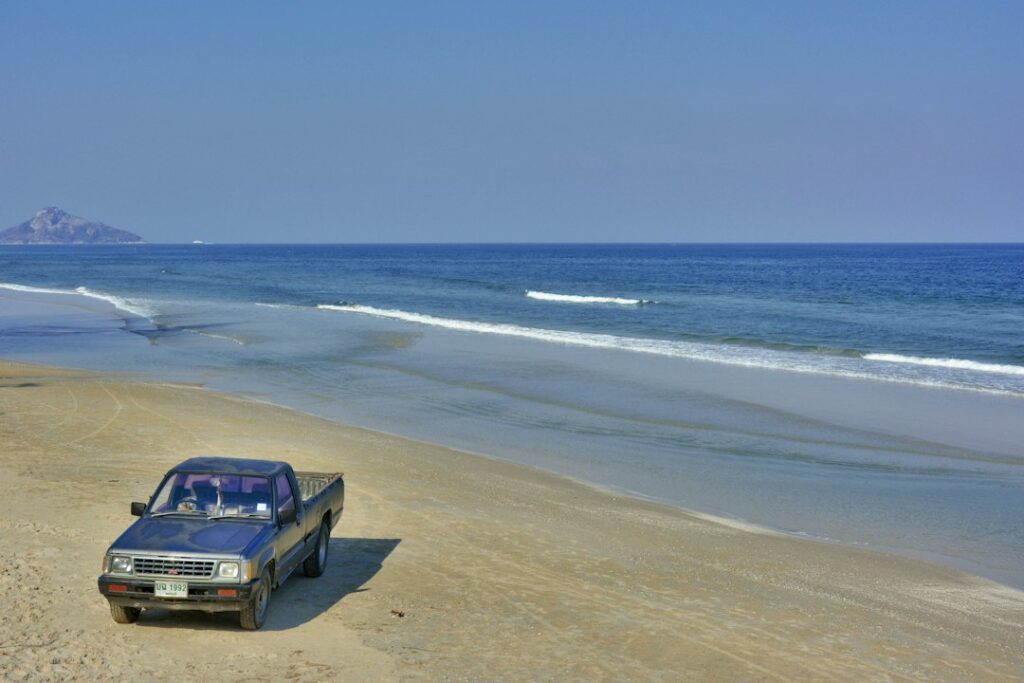
Hua Hin, Thailand: A Digital Nomad Guide

Last fact-checked: September 18, 2026. Prices are planning assumptions in Thai baht (THB), not guarantees. This guide is based on official destination information and current provider/listing pages; it does not claim a firsthand stay.
Hua Hin at a glance
Hua Hin is a Gulf of Thailand beach town that works best for digital nomads who prefer a quieter, lower-rise base to Bangkok. Its appeal is practical: a railway connection to the capital, a long urban coastline, supermarkets, hospitals, cafés, weekend markets and enough long-stay housing to build a routine.
It is less suitable if you want a dense startup community, late-night networking or metro-style public transport. The town is spread along Phetkasem Road, so neighborhood choice determines whether you can live comfortably without a scooter.
| Quick fact | What it means for a nomad |
|---|---|
| Best fit | Quiet work month, couples, families, beach routine |
| Main constraint | Dispersed layout and limited mass transit |
| Work setup | Apartment Wi-Fi plus cafés; verify dedicated coworking before paying |
| Currency | Thai baht (THB) |
| Main areas | Central Hua Hin, Nong Kae/Market Village, Khao Takiab |
| Planning budget | THB 50,500/month for one person in a private room/apartment scenario |
Is Hua Hin good for digital nomads?
Yes, for the right work style. Hua Hin suits remote workers who value beach access, routine and a lower-intensity social scene. It is not a Chiang Mai replacement: the visible coworking ecosystem is smaller, so the safest plan is to secure reliable apartment internet and treat cafés or coworking as backup.
The Tourism Authority of Thailand describes Hua Hin as a beach destination with seafood restaurants, a night market, beach activities, golf and nearby Khao Takiab. For a month-long stay, the same compact tourism infrastructure provides grocery shopping, exercise and low-effort evenings.
Internet and places to work
Ask every host or landlord for a recent speed test from the exact unit, not the building lobby. Confirm whether the router is inside the room, whether the connection is shared and whether mobile signal works at the desk.
Hua Hin has independent workspaces, but availability can change. The Hub Hua Hin advertises a coworking concept and nearby accommodation, while its public page asks visitors to register interest rather than presenting a stable day-pass price. Contact the venue directly before building a workweek around it.
For cafés, use a test visit before a long call. Check outlet access, music, peak-hour laptop policy and background noise. Buy regularly and avoid occupying a small table through a meal rush.
Best work setup:
- verified home Wi-Fi;
- Thai SIM/eSIM as failover;
- one tested café or workspace near home; and
- a Bangkok backup plan for critical meetings during a building outage.
Best neighborhoods
Central Hua Hin
Stay centrally if you want the railway station, night market, beach and daily services within a relatively compact area. This is the easiest first choice without a scooter, but it can be busier and noisier around tourist streets.
Nong Kae and the Market Village/Blúport corridor
This southern-central corridor balances shopping, modern condos and access to the beach. It works well for people who want supermarkets and malls nearby. Walkability varies by soi, and crossing Phetkasem Road can be unpleasant.
Khao Takiab
Khao Takiab has a slower beach atmosphere and is near Cicada Market. It is attractive for a quieter month, but trips into central Hua Hin add time and cost. Choose it if most of your daily life can happen locally.
North Hua Hin and Cha-am direction
Northern properties can offer more space or resort facilities, but they are less convenient without your own transport. Check the precise map location; a listing labeled “Hua Hin” may be far from the center.
Housing and current price evidence
Short stays and long leases are different markets. A low annual-lease advertisement does not prove that the same unit is available for one month or includes utilities.
For a transparent short-stay anchor, The Hub Hua Hin’s public page listed nearby deluxe accommodation at THB 600 per night when checked on September 18, 2026. Thirty nights at that rate equals THB 18,000 before confirming taxes, utilities, cleaning and availability.
Current listing portals show a wide spread. FazWaz reported a median monthly rent around THB 27,300 across Hua Hin homes, while RentHub displayed budget apartment listings from roughly THB 2,500–12,500 per month. Those figures are not directly comparable: inventory, minimum lease, furnishings, deposits, location and utilities differ.
Before booking, confirm:
- minimum stay and deposit;
- electricity rate per unit and water charges;
- Wi-Fi speed and whether it is private;
- weekly/monthly cleaning;
- desk and ergonomic chair;
- noise from construction or nightlife;
- cancellation terms; and
- whether the quoted total includes platform fees and taxes.
Monthly cost of living: THB 50,500 scenario
This is a planning budget for one person using a private room/apartment, eating a mix of local food and groceries, working partly from home and getting around without owning a scooter. It excludes flights, visa fees, deposits, major medical care and alcohol-heavy nightlife.
| Category | THB/month | Basis |
|---|---|---|
| Accommodation | 18,000 | 30 × THB 600 provider quote; verify inclusions |
| Utilities and home internet | 3,000 | Conservative allowance if not included |
| Food and groceries | 12,000 | THB 400/day average |
| Local transport | 4,500 | THB 150/day average without a scooter |
| Workspace and cafés | 3,000 | THB 100/day allowance; no fixed coworking claim |
| Health and fitness | 2,500 | Gym/classes/pharmacy planning allowance |
| Leisure and day trips | 3,500 | Modest weekend activity allowance |
| Phone/data | 500 | Planning allowance; verify current operator plan |
| Travel/health insurance | 3,500 | Placeholder for an individual policy; quote separately |
| Total | 50,500 | Private-room planning scenario |
We keep the budget in THB rather than adding a fast-staling foreign-currency conversion. Use the current rate from your bank or card network when planning.
Getting around without a scooter
Living without a scooter is realistic only if you choose the neighborhood carefully. Put housing within walking distance of groceries, a workable café and your preferred part of the beach.
For longer trips, use local shared transport where the route is clear, ride-hailing where available, or a metered/negotiated taxi. Confirm the fare before entering when no meter is used. Private drivers make sense for national parks or scattered attractions, especially for a group.
Cycling can work on quiet local streets but main-road traffic and heat reduce its usefulness. Walking is easiest early and late in the day; shade and continuous sidewalks are inconsistent.
Getting to Hua Hin
Rail connects Bangkok and Hua Hin, but exact departure station, train and travel time depend on the service. Search the official SRT D-Ticket portal and check the ticket carefully. Minivans, buses and private transfers also operate, with different Bangkok terminals and baggage rules.
For a month with luggage, compare door-to-door cost rather than the headline fare. A private transfer costs more but removes terminal transfers; the train is more spacious but may require additional taxis at each end.
Visa and legal stay
Your lawful stay depends on nationality, purpose and current Thai rules. Thailand’s e-Visa portal is the correct starting point for visa categories and the embassy or consulate responsible for your residence.
Do not assume that visa-free entry authorizes remote work, or that a social-media summary reflects the current Destination Thailand Visa requirements. Check the official e-Visa checklist for your application location and obtain professional advice for tax or work-authorization questions.
Food, markets and nightlife
Hua Hin’s daily rhythm is built around Thai restaurants, seafood, mall food courts and markets rather than an all-night club scene. Central Hua Hin Night Market is convenient for visitors. Cicada Market in Nong Kae focuses on crafts, art and food and currently operates on weekend evenings according to its public listing; recheck hours before traveling.
For a working month, balance restaurant meals with a kitchen. The THB 12,000 budget assumes an average of THB 400 per day, not three imported-food restaurant meals.
Beaches and things to do
Hua Hin Beach is the simplest daily option. Khao Takiab combines a beach area with a hilltop temple. Inland and south of town, travelers use Hua Hin as a base for golf, parks and the Pran Buri coast.
Good low-effort activities include sunrise walks, a weekend market, a temple visit and a half-day outside the center. For national parks or long coastal trips, check current access, weather and transport with the responsible authority.
Climate and best season
Hua Hin is warm year-round. Rainfall and sea conditions vary by month, and the Gulf coast does not follow exactly the same pattern as Thailand’s Andaman destinations.
For remote work, weather affects more than sightseeing: heavy rain can disrupt short walks, outdoor cafés and day trips, while peak holiday periods can raise short-stay prices. Compare a current weather outlook and the specific cancellation policy rather than relying on a generic “best month.”
Families
Hua Hin can be comfortable for families because of malls, supermarkets, hospitals, beaches and a quieter evening scene. The challenge is transport: a property that looks close on a map may require crossing a major road or arranging rides.
Check pool barriers, balcony safety, stair access and the walking route to groceries. For a stay longer than a month, research school or childcare availability directly; do not assume tourist kids’ clubs provide regular care.
Fitness and health
The town supports beach walking, gyms, yoga and water sports. Before joining a gym, check whether the day/month pass includes classes and towels.
For medical planning, locate the nearest appropriate clinic or hospital and confirm what your insurance requires. Keep policy details offline and know whether treatment is paid upfront. The THB 3,500 insurance line in the budget is only a placeholder; premiums vary materially by age, nationality, trip length and coverage.
Hua Hin has a long-stay international population, but its community is less concentrated around coworking than Chiang Mai. Meetups may form around fitness, cafés, language exchange, sailing, golf or family life.
If community is essential, verify current events before booking a month. A beautiful condo with no nearby routine can feel isolated.
Remote jobs and time zones
Thailand uses ICT (UTC+7) year-round. The time zone suits Asian clients and can overlap with Europe in the afternoon/evening. North American teams often require late hours.
Confirm with your employer that working from Thailand is permitted. Company policy, data security, tax exposure and immigration rules are separate questions from whether the internet connection is fast enough.
Insurance
Choose coverage for your actual activities and trip length. Check outpatient limits, evacuation, motorbike exclusions, deductibles, pre-existing conditions and whether direct billing is available. If you ride a scooter without the required license or helmet, a policy may exclude the claim.
See our digital nomad insurance guide for a framework, then verify the live policy wording yourself.
Final verdict
Hua Hin is a practical Thai base for a calm work month, especially if you choose central Hua Hin or the Nong Kae corridor and can walk to daily needs. Its beach routine and housing range are advantages; dispersed transport and a smaller coworking scene are the trade-offs.
Budget around THB 50,500 for the private-room scenario above, verify Wi-Fi before payment, and make neighborhood convenience the deciding factor. If you want a denser professional community, compare Bangkok and Chiang Mai coworking before committing.
Frequently asked questions
Is Hua Hin cheaper than Bangkok?
It can be for housing and daily routines, but a short beach-area stay and frequent taxis can erase the difference. Compare the final monthly basket, not one rent listing.
Can I live in Hua Hin without a scooter?
Yes, if housing is close to groceries, your workspace and the beach. A remote condo may make ride costs and inconvenience the dominant issue.
Is there coworking in Hua Hin?
Independent spaces exist, but public prices and availability can change. The Hub Hua Hin advertises coworking while asking visitors to register interest; confirm access and rates directly.
What monthly budget should a solo nomad use?
Our private-room planning scenario totals THB 50,500 and includes accommodation, utilities, food, local transport, workspace, health/fitness, leisure, phone/data and a placeholder insurance amount.
Is Hua Hin good for families?
It can be, particularly for families wanting beaches and a quieter routine. Inspect road crossings, pool/balcony safety, medical access and transport before booking.
Sources
Hua Hin Monthly Budget: THB 50,500 (Illustrative)
One adult, one month. Planning allowances, not live quotes. See the full budget and exclusions.








Responses