

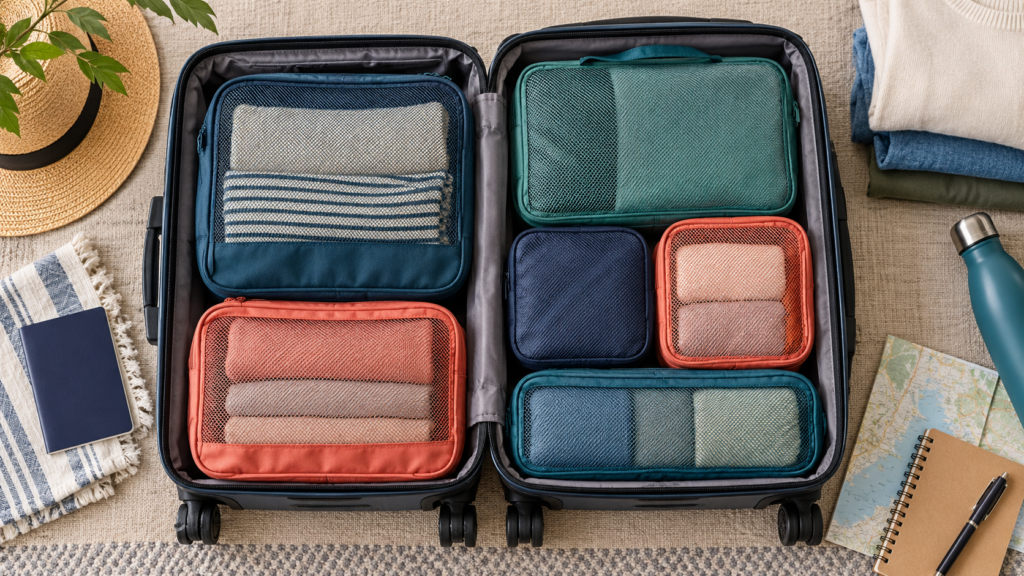
Best Packing Cubes for Long-Term Carry-On Travel

Packing cubes do not make clothes lighter, and compression does not create extra airline weight allowance. Their real value is controlling shape, separating categories and making repeated unpacking less disruptive. For long-term carry-on travel, the most useful cube is therefore not automatically the one that compresses the most. It is the one that fits your bag, adds little dead weight and matches how often you move.
This comparison focuses on three current systems with clearly published manufacturer information: Peak Design Packing Cubes, Eagle Creek Pack-It Reveal cubes and the Osprey Ultralight Packing Cube Set. Specifications and US prices were checked on 23 September 2026. We did not physically test these products, assign scores or use affiliate links.
Quick verdict by use case
| Best fit | Product | Price checked | Published weight | Main trade-off |
|---|---|---|---|---|
| Compression plus clean/dirty separation | Peak Design Packing Cube, Small | $29.95 each | Check selected size at purchase | Premium price for one cube |
| Visible, structured organization | Eagle Creek Pack-It Reveal XS/S/M Set | $59 for three | 229 g combined | Mesh visibility but no compression zip |
| Lowest published set weight | Osprey Ultralight Packing Cube Set | $45 for three | 0.159 lb / about 72 g | Less structure and no published volume table on the product page |
Prices exclude tax and shipping and can change. The comparison uses manufacturer pages rather than retailer listings so model names and materials can be checked against the source.
How we compared packing cubes
We looked at five factors that matter in a 30–45 litre carry-on:
- Packed geometry. A cube should create a predictable block that fits the base of a backpack or suitcase without leaving large gaps.
- Weight. Organizers count toward the same cabin-bag limit as everything inside them.
- Compression design. A second zip can reduce bulk, but it can also create a hard, overfilled block.
- Access and separation. Mesh visibility, wide openings and a clean/dirty divider solve different problems.
- Evidence quality. We used current manufacturer specifications and avoided durability or capacity claims that would require hands-on testing.
Before buying, measure the flat internal floor of your bag rather than relying only on its advertised litre capacity. Wheel housings, curved corners and laptop compartments can all reduce the usable rectangle.
Peak Design Packing Cube: best for compression and clean/dirty separation
Peak Design sells its Packing Cube in Small, Smedium, Medium and Large sizes. The Small was listed at $29.95 when checked. The manufacturer describes an expansion/compression zip and an internal divider that lets the clean and dirty sections expand into each other. That makes the design particularly relevant to long trips where laundry is not always done on schedule.
The current product page lists a 100% recycled, weatherproof 70D ripstop fabric and a tear-away main opening. Those are manufacturer claims, not independent test results. The cube is designed to work in other luggage as well as Peak Design bags.
Choose it when you want one or two cubes to do several jobs. The divider can reduce the need for a separate laundry sack, while the compression zip helps control soft clothing. The compromise is cost: a multi-cube setup becomes expensive compared with a three-piece set.
The most important packing caution is not to treat the compression zip as permission to add more clothes. Compressing a dense cube can shift weight away from the centre of a backpack and make the bag harder to close. Pack the cube, weigh the complete bag and then decide whether compression improves the shape.
Source: Peak Design Packing Cube.
Eagle Creek Pack-It Reveal Set: best for visible organization
The Eagle Creek Pack-It Reveal set includes one extra-small, one small and one medium cube. It was listed at $59. The manufacturer publishes the following figures:
| Size | Dimensions | Calculated capacity | Weight |
|---|---|---|---|
| XS | 7.5 × 4.5 × 2.5 in | 1 L | 45 g |
| S | 10 × 7 × 3 in | 3 L | 71 g |
| M | 14 × 10 × 3 in | 7 L | 113 g |
Together, the published capacities total 11 litres and the weights total 229 g. Sewing tolerances mean real dimensions can vary slightly. The set uses recycled 300D polyester and poly mesh, and Eagle Creek says the fabric is water-resistant. The mesh lids make contents visible and help damp clothing dry faster, but they are not a substitute for a waterproof bag.
This set suits travellers who organize by category: underwear and cables in the XS, tops in the Small and trousers or mid-layers in the Medium. Because the cubes do not use a compression zip, their advantage is predictable organization rather than maximum volume reduction.
The Medium’s 14 × 10 inch footprint should be checked carefully against narrow travel backpacks. It is likely to fit many cabin suitcases, but a curved backpack may use the same volume less efficiently.
Osprey Ultralight Packing Cube Set: best when organizer weight matters
Osprey’s set includes one Small, one Medium and one Large cube. The listed US price was $45, and the manufacturer publishes a total weight of 0.159 lb, about 72 g. That is notably light for a three-piece system.
The cubes use 100% recycled 40D high-tenacity nylon for the main body. Osprey lists a J-zip opening, double zipper pulls and grab handles. The product page does not provide a capacity figure for each cube, so buyers should confirm the individual measurements through the current size information before ordering.
This set makes sense when your airline applies a strict 7 kg or 8 kg cabin limit, or when you already carry a laptop and other dense equipment. The trade-off is that ultralight fabric usually provides less shape than a structured mesh cube. That is not automatically a weakness: a soft cube can conform to a backpack, but it may be less convenient when moved repeatedly between bags.
Source: Osprey Ultralight Packing Cube Set.
Compression cubes versus standard cubes
Compression cubes reduce the volume of soft items by squeezing out air and limiting expansion. They do not reduce mass. In a carry-on, that distinction matters because airline limits can be based on dimensions, weight or both.
A compression cube is most useful for:
- synthetic shirts, underwear and other compressible clothing;
- keeping a loose backpack load from shifting;
- reducing the depth of a cube so a bag closes more cleanly.
A standard cube is often better for:
- wrinkle-prone shirts or structured clothing;
- category-based organization;
- travellers who are already close to the airline weight limit;
- bags with irregular interiors where a dense rectangular block wastes space.
If a compressed cube bulges in the middle, it may occupy more usable depth than its edge measurement suggests. Stop tightening when the cube becomes a rigid football-shaped block.
A practical carry-on setup
For a 30–40 litre travel backpack, start with two cubes rather than a complete matching set:
- one medium cube for most tops and bottoms;
- one small cube for underwear, sleepwear and gym clothes;
- one lightweight laundry bag or a divided cube for worn clothing.
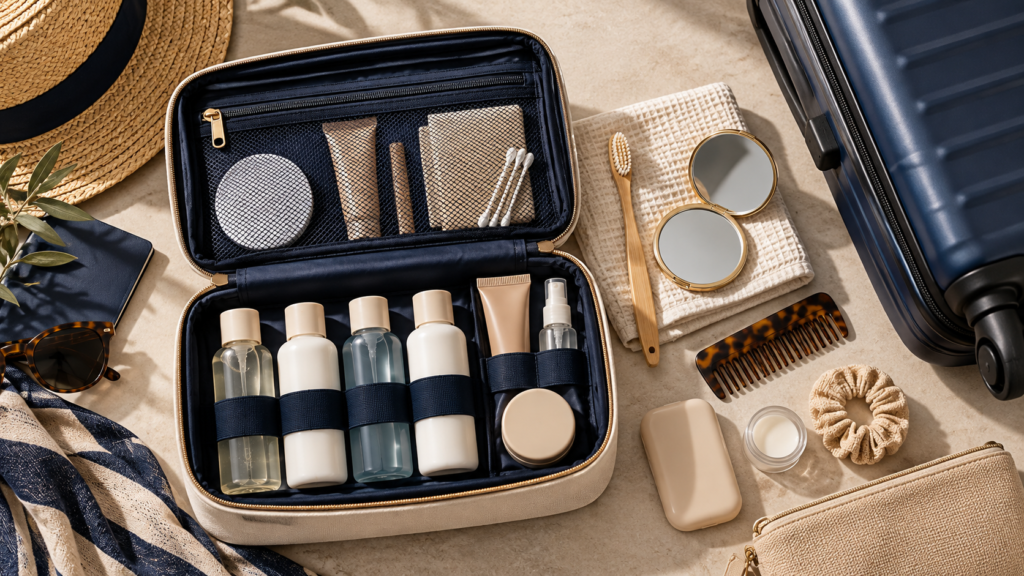
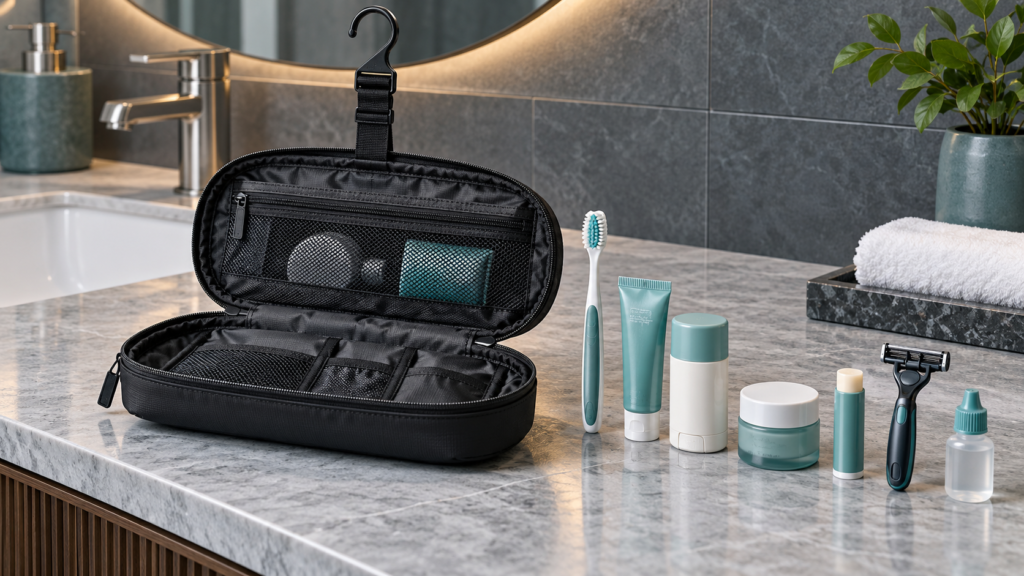
Leave shoes, outerwear and a toiletry bag outside the main clothing cube. They fill edge spaces more efficiently and are easier to remove at security or on arrival. Our packing list for Europe can help you decide what belongs in the cubes before you choose their sizes.
For long-term travel, pack for a laundry interval, not for the full trip. Seven to ten days of clothing is usually easier to manage than trying to compress several weeks into one carry-on. The right cube should make that repeatable routine simpler.
What to check before buying
- Internal bag measurements: measure between wheel wells and around the laptop sleeve.
- Return terms: test the empty cubes in your bag before removing tags.
- Current model: product names and fabrics change; compare the listing with the manufacturer page.
- Airline weight limit: add the cube weight to the complete packed bag.
- Laundry plan: choose visibility, compression or separation according to how you actually travel.
Bottom line
Peak Design is the clearest fit for travellers who value compression and a built-in clean/dirty divider. Eagle Creek’s Reveal set is the strongest organizational option when visibility and three distinct sizes matter. Osprey is the most compelling of these three when the published organizer weight is the deciding factor.
None is universally best. Measure your bag, decide whether you need compression or visibility, and buy the smallest system that supports your real packing routine.
Frequently asked questions
Do packing cubes save space?
They can control shape and compress soft clothing, but they do not change weight. A well-packed cube may use space more predictably; an overfilled cube can waste space around its edges.
How many packing cubes do I need for long-term travel?
Two clothing cubes plus a laundry solution are enough for many carry-on travellers. More pieces add organization but also add weight and can make the bag less flexible.
Are mesh packing cubes waterproof?
No. Mesh improves visibility and ventilation. Use a dry bag or waterproof liner for items that must remain protected from water.
Should I roll or fold clothes inside a cube?
Use whichever method creates an even layer. Rolling works well for soft casual clothing; folding can be better for shirts and trousers that crease easily.



Responses