
Slovenia Digital Nomad Visa: What Applicants Can Do in 2026

Slovenia’s digital nomad residence permit is now live. It was introduced on 21 November 2025 for eligible non-EU/EEA remote workers whose employment, contracts or self-employment are based outside Slovenia.
This is a dated, source-led guide checked on 17 September 2026. It explains what Slovenia’s government has confirmed, where applications can be made and which details applicants should verify directly. It does not substitute for immigration or tax advice.
Slovenia digital nomad permit at a glance
| Question | Official position checked September 2026 |
|---|---|
| Who is it for? | A non-EU/EEA national working remotely through information and communication technology for a business outside Slovenia, or self-employed abroad, without entering the Slovenian labour market |
| Where can you apply? | At a Slovenian diplomatic mission or consulate abroad; or at an administrative unit if you are already legally residing in Slovenia |
| Maximum validity | Up to one year |
| Can it be extended? | No |
| When can you apply again? | Six months after the previous digital nomad permit expires |
| Is a labour-market permit required? | The government says no Employment Service consent or work permit is required for this permit category |
| Can family join? | Immediate family reunification is available without the usual waiting condition tied to prior residence or permit duration |
| Income requirement | Sufficient means equal to at least twice Slovenia’s average monthly net salary, calculated using the most recently published average monthly gross salary in the Official Gazette |
Source: Slovenia’s official digital nomad permit announcement, published 21 November 2025 and last edited 9 January 2026.
Who qualifies for Slovenia’s digital nomad permit?
The government describes a digital nomad as a foreign national who is not an EU or EEA citizen and who works remotely using information and communication technology. The work must be for a company located outside Slovenia, under a civil-law contract with a business abroad, or through self-employment abroad.
The central boundary is Slovenia’s labour market: the applicant must not be employed by, or otherwise enter the labour market of, a Slovenian business. The permit therefore fits location-independent work connected to foreign clients or employers. It is not a shortcut into a local Slovenian job.
EU citizens follow different residence rules. Slovenia’s official entry and residence guidance says EU citizens do not need a visa or residence permit to enter. They may stay for three months without registering residence; for a longer stay, they must apply for a residence registration certificate before that period expires.
Where applicants can apply
Slovenia confirms two application routes:
- Apply outside Slovenia at a Slovenian diplomatic mission or consular post.
- If already legally residing in Slovenia, apply at any administrative unit in the country.
The second route is significant because it gives a legally present visitor a domestic filing option. It does not mean that every person may enter Slovenia visa-free, overstay a short-stay allowance or work locally while an application is considered. Entry conditions still depend on nationality and individual circumstances.
Third-country visitors using the Schengen short-stay framework are generally limited to 90 days in any 180-day period. Check the official entry and residence page and the relevant Slovenian mission before travel.
What the government has confirmed about documents
The official announcement confirms the legal category, work relationship, income formula, application locations and family rules. It does not provide a complete, universally applicable upload checklist on that announcement page.
Applicants should expect the competent mission or administrative unit to require evidence supporting the statutory conditions. Rather than relying on an unofficial checklist, request the current form and document list from the office that will receive the application. In particular, ask how it wants proof of:
- a valid travel document and legal stay, where applicable;
- remote employment, a foreign civil-law contract or foreign self-employment;
- the employer’s or business’s location outside Slovenia;
- sufficient means under the current salary-based formula;
- health coverage and any general temporary-residence requirements;
- family relationship, if dependants apply.
These are preparation questions, not a claim that one identical list applies to every case. Translation, legalization, validity-period and original-document requirements can vary by document and receiving office.
How the income requirement works
Slovenia states that a digital nomad must have monthly means equal to at least twice the average monthly net salary in the country. The calculation uses the most recently published average monthly gross salary in Slovenia’s Official Gazette.
That is a moving formula, not a permanent euro amount. A figure copied from an old blog can become wrong when a new official salary figure is published. Ask the receiving mission or administrative unit which reference figure and period it will use on the date you apply, and what evidence is acceptable.
We have intentionally not converted the formula into a fixed threshold here because the government page does not present one permanent amount.
Validity, renewal and switching status
The digital nomad permit may be issued for up to one year. Slovenia says it cannot be extended. A former holder may apply for another digital nomad permit six months after the previous one expires.
During the permit’s validity, the holder may apply for a temporary residence permit on another ground if their circumstances change. That could matter to someone who later qualifies through study, family, employment or another recognized purpose, but each route has its own requirements.
Applicants should build an exit or status-change decision into their calendar well before the one-year endpoint. “Cannot be extended” means a last-minute renewal is not the fallback.
Can family members come to Slovenia?
The official announcement says digital nomads may reunite with immediate family members without being subject to the normal condition linked to the sponsor’s previous length of residence or permit validity.
That is favorable, but it is not the same as saying every dependant may work in Slovenia automatically. The announcement says immediate family members may participate in the labour market under conditions established by Slovenia’s law governing employment, self-employment and work of foreigners. Families should therefore verify each person’s residence and work position separately.
Residence registration after arrival
Slovenia’s general entry and residence guidance says a foreign national holding a temporary residence permit must register a temporary residence address within eight days of entering the country, receiving the permit or taking up temporary residence. The exact trigger depends on the person’s situation.
Keep proof of accommodation available and confirm the registration route with the administrative unit or accommodation provider. This step is separate from receiving the residence permit itself.
Immigration permission is not a tax answer
A residence permit determines whether and on what basis a person may reside in Slovenia. It does not, by itself, settle tax residence, social-security obligations, payroll treatment or whether a foreign business creates local reporting duties.
Personal outcomes depend on time in Slovenia, ties, income structure, treaty rules and other facts. Before moving, obtain advice based on your actual situation and use Slovenia’s Financial Administration as the primary source for current tax procedures.
A practical application sequence
1. Confirm the route and timing
Decide whether to file through a Slovenian mission abroad or, if legally present, an administrative unit in Slovenia. Confirm whether an appointment is required and how the office handles originals and biometrics.
2. Ask for the current form, checklist and fee
Do this directly with the receiving office. Government fees and operational procedures can change, and the central announcement does not state a complete current fee schedule for every filing route.
3. Document the foreign work relationship
Prepare clear, current evidence of employment, contracts or self-employment outside Slovenia. The documents should explain who pays you, where that party is established, what work you do and how it is performed remotely.
4. Prove means using the office’s current calculation
Do not rely on a cached euro threshold. Ask which official salary publication controls the calculation and which bank, payslip, contract or accounting records it accepts.
5. Check family and tax consequences separately
Family reunification, a dependant’s right to work and tax residence are related to the move but are not the same legal question.
6. Plan the first week in Slovenia
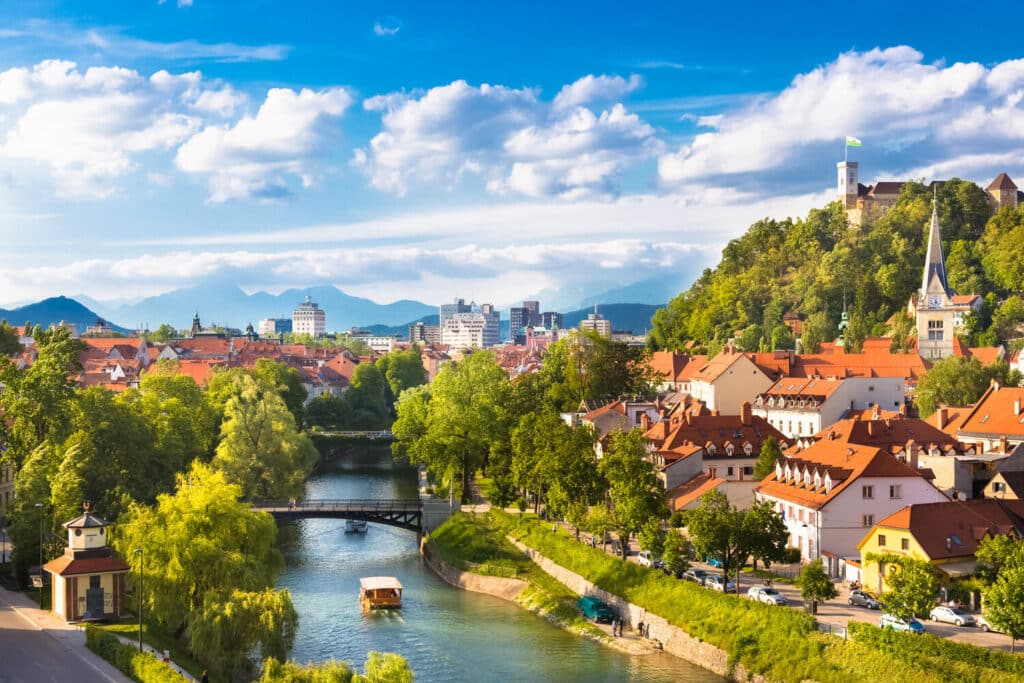
Arrange accommodation evidence and confirm residence-address registration. If Ljubljana is your likely base, our Ljubljana city guide covers neighborhoods, transport and day-to-day logistics; verify any prices again before committing.
What remains unconfirmed on the central government page
As of 17 September 2026, the central official announcement does not state a single fixed income amount, universal processing time, full document checklist or one fee covering every filing route. We have not filled those gaps with figures from commercial visa sites.
Get these items in writing from the specific mission or administrative unit handling the application. If an office’s instructions conflict with a third-party summary, follow the competent authority.
Frequently asked questions
Is the Slovenia digital nomad visa open?
Yes. Slovenia says the temporary residence permit for digital nomads was introduced on 21 November 2025.
Can a digital nomad work for a Slovenian company?
Not under this category. The government defines the permit around remote work for a business outside Slovenia or self-employment abroad, without entering Slovenia’s labour market.
How long is the permit valid?
It may be issued for up to one year and cannot be extended. A new digital nomad application is possible six months after the previous permit expires.
Can I apply from inside Slovenia?
The government says a person already legally residing in Slovenia may apply at any administrative unit. Legal entry and stay conditions still apply.
What is the exact minimum income?
The official rule is a formula: at least twice Slovenia’s average monthly net salary, calculated using the most recently published average monthly gross salary in the Official Gazette. Confirm the controlling figure with the receiving office when you apply.



Responses