

Fukuoka, Japan: Digital Nomad Guide

Last fact-checked: September 21, 2026. Prices below are planning assumptions in Japanese yen (JPY), not guarantees. This guide uses official and current provider information and does not claim a firsthand stay.
Fukuoka at a glance
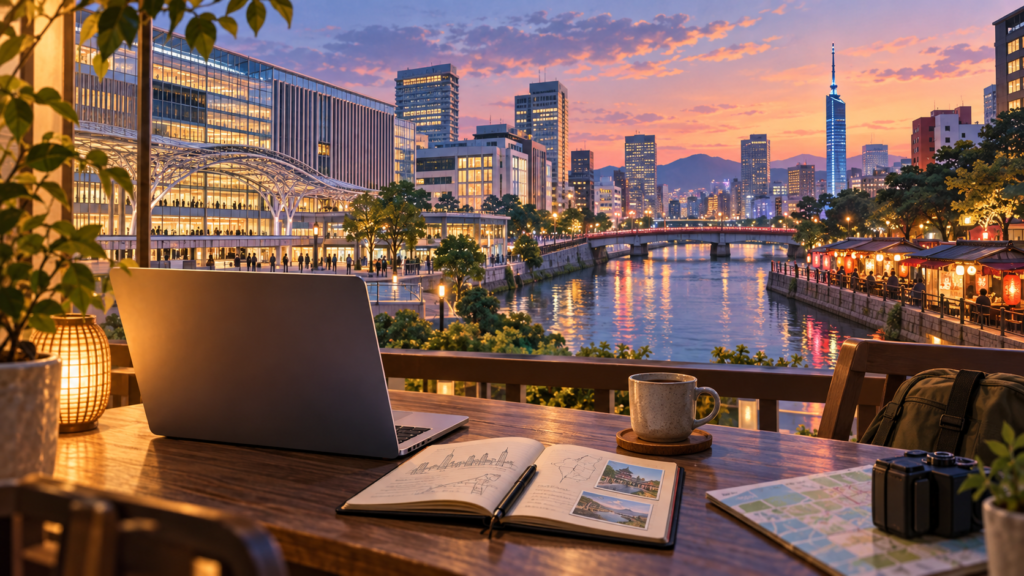
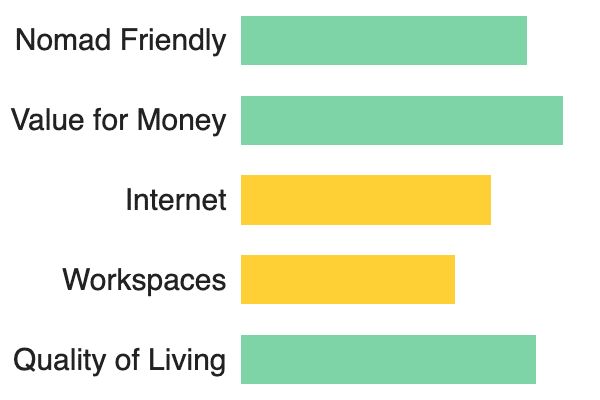
Fukuoka is one of Japan’s most practical large-city bases for remote workers: the airport is unusually close to the center, Hakata and Tenjin cover most daily needs, and the subway makes a car unnecessary. The trade-off is that short furnished stays can be expensive and Japan’s immigration rules require more care than a normal tourist visit.
| Quick fact | Planning answer |
|---|---|
| Best fit | Remote workers who want Japanese city life with compact transport |
| Main areas | Tenjin/Daimyo, Hakata, Nakasu and quieter western neighborhoods |
| Currency | Japanese yen (JPY) |
| Time zone | Japan Standard Time, UTC+9 year-round |
| Planning budget | JPY 270,000/month for one person in a furnished private-stay scenario |
Is Fukuoka good for digital nomads?
Yes, especially for people who value efficient transport, food, safety and a less overwhelming scale than Tokyo or Osaka. The city is compact enough to build a routine around one neighborhood while retaining easy access to a major station, airport and waterfront.
It is a weaker choice for a very low budget or for travelers who assume a tourist entry status automatically covers remote work. Before booking a long stay, confirm immigration, employer-policy, tax and social-security implications for your own circumstances.
Internet and coworking
Do not choose a room from a generic “Wi-Fi included” label. Ask for a recent speed test from the exact unit, whether the router is private or shared, and whether uploads and video calls are stable at working hours. A Japanese data SIM or eSIM is useful backup.
For a current coworking anchor, fabbit Global Gateway ACROS Fukuoka lists a free-access plan at JPY 22,000 per month including tax, plus a JPY 22,000 initial fee. Its public page also lists a JPY 2,200 weekday day pass, staffed access from 9:00 to 18:00 and 24-hour access for applicable members. Those conditions were checked on September 21, 2026; confirm the contract and access level before paying.
Best neighborhoods
Tenjin and Daimyo
Choose Tenjin for shopping, restaurants, nightlife and a dense concentration of cafés and workspaces. Daimyo has a more independent, creative feel. Central convenience comes with smaller rooms and more weekend noise, so check the building and street.
Hakata
Hakata is the practical transport choice: the main station handles rail connections and the airport is only a short subway ride away. It suits frequent trips and business routines, though some blocks feel more functional than residential.
Nakasu and Gofukumachi
Nakasu puts nightlife and riverside dining nearby. Gofukumachi and the blocks east of the center can feel calmer while remaining connected. Inspect late-night noise before committing.
Western Fukuoka
Areas west of Tenjin can offer a quieter routine and coastal access. They work best if your daily needs sit near a subway station; otherwise central trips add friction.
Housing and booking checks
Short furnished accommodation, hotels, monthly apartments and normal residential leases are different markets. A yearly lease headline is not evidence that a visitor can rent for one month, and many residential contracts add guarantor, key money, agency, cleaning or renewal charges.
Tokyu Stay Fukuoka Tenjin is one example of a property advertising in-room Wi-Fi, washer-dryers and kitchenettes suited to longer stays, but its prices are dynamic. Compare the final 30-night total, cancellation terms, room size and desk setup. Never extrapolate a single night’s promotional rate to a monthly budget.
Monthly cost of living: JPY 270,000 scenario
This editorial model is for one person in a private furnished stay, using coworking, cooking some meals and using public transport. It is not a market average. It excludes flights, immigration fees, deposits, the fabbit initial fee, taxes and major medical costs.
| Category | JPY/month | Assumption |
|---|---|---|
| Furnished accommodation | 120,000 | Editorial short-stay allowance; quote exact dates |
| Coworking | 22,000 | Current fabbit free-access monthly price |
| Food and groceries | 60,000 | Mix of groceries and casual meals |
| Local transport | 10,000 | Subway/bus planning allowance |
| Utilities and mobile | 15,000 | Allowance where not included |
| Leisure and fitness | 18,000 | Modest activities budget |
| Insurance and miscellaneous | 25,000 | Individual placeholder; obtain quotes |
| Total | 270,000 | One-person planning scenario |
Transport and airport access
Fukuoka City Subway says services generally run from about 5:30 until 00:25, with trains every four to eight minutes. Its route information lists Fukuoka Airport to Hakata at about five minutes and to Tenjin at about eleven minutes. Allow extra time for walking, waiting and the terminal.
The official one-day subway pass costs JPY 640 for an adult and JPY 320 for a child and is valid only on the day of purchase. For ordinary work weeks, compare pay-as-you-go travel with the route-specific commuter options that fit your stay.
Visa and legal stay
Japan’s official Immigration Services Agency has a “Designated Activities” status for eligible digital nomads. It allows qualifying international remote work for up to six months, cannot be extended and does not produce a residence card. Applicants must hold an eligible nationality, show annual income of at least JPY 10 million, and have private medical travel insurance with at least JPY 10 million medical-treatment coverage.
The category covers remote work for a foreign organization or services and sales to people outside Japan; it does not authorize work for a Japanese organization. A spouse or child category exists with its own eligibility and insurance evidence. The official page says a former holder must wait six months before applying again. Check the current country list and document schedule before acting.
Daily life, food and work rhythm
Fukuoka is known for compact dining districts and yatai food stalls, but a working month needs more than sightseeing. Choose housing within walking distance of groceries, test a quiet call location, and use the food budget as an average rather than a promise that every meal will be inexpensive.
For exercise, riverside and waterfront routes can support walking and running, while neighborhood gyms may require registration and indoor shoes. Confirm visitor membership and cancellation rules.
Time zones and remote-work fit
Japan Standard Time is UTC+9 year-round. It aligns well with East Asian and Australian clients. European calls often fall in the evening, while North American collaboration may require early mornings or late nights. Check whether the building’s quiet hours work with your schedule.
Final verdict
Fukuoka combines unusually easy airport access, a compact center and strong everyday infrastructure. Tenjin suits social life and coworking; Hakata suits frequent travel. A transparent planning target is JPY 270,000 per month, but furnished-stay prices can move substantially.
Compare our Tokyo digital nomad guide and the wider city guide directory before choosing a Japanese base.
Frequently asked questions
Can digital nomads legally stay in Japan?
Eligible applicants can use Japan’s official six-month Designated Activities category. Nationality, income, insurance and work-relationship rules apply; tourist status is a separate question.
Is Fukuoka easy without a car?
Yes for most central routines. The subway links the airport, Hakata and Tenjin, while buses cover many additional routes.
What monthly budget should one person use?
Our explicit furnished-stay model totals JPY 270,000. It is a planning scenario, not a citywide average.
Sources
Fukuoka Monthly Budget: JPY 270,000 (Illustrative)
One adult, one month. Planning allowances, not live quotes. See assumptions and exclusions.


Responses