

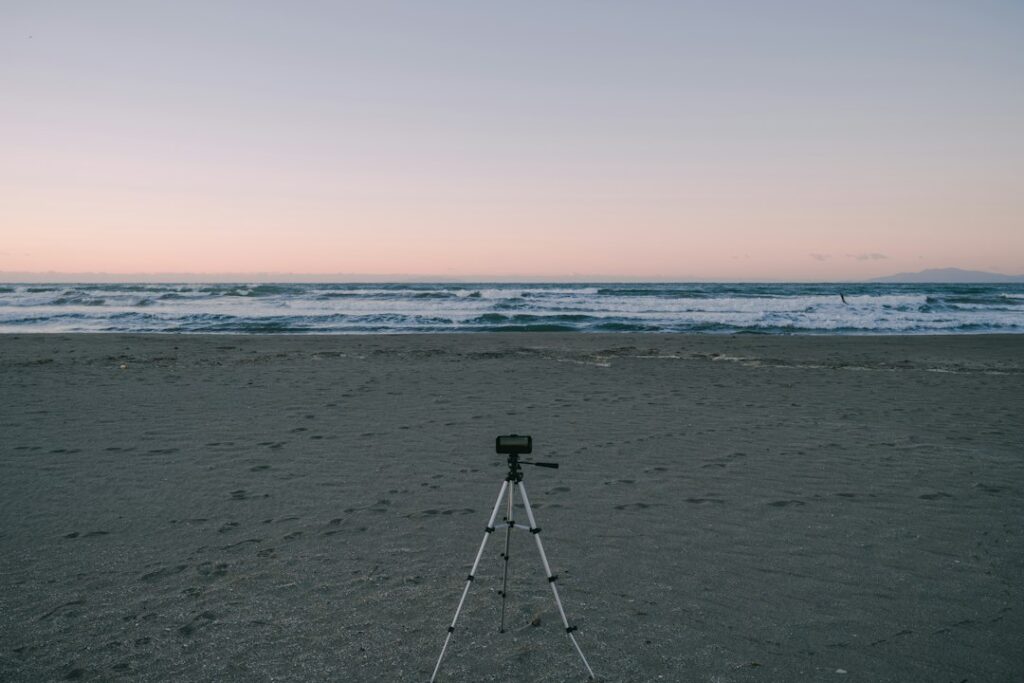
Best Travel Tripods for Remote Creators: Packed Size and Stability

The best travel tripod is not simply the lightest model or the one with the largest advertised payload. Remote creators need a useful balance of packed length, weight, working height, head compatibility and setup speed. This comparison uses manufacturer specifications and current official prices checked on 17 October 2026. We did not perform hands-on wind, vibration or overload tests, so “stability” here means design and rated capacity—not a fabricated field result.
Our comparison methodology
We shortlisted portable tripods with current manufacturer product pages and compared:
- Folded or stored length, because a tripod that does not fit your bag is not truly portable.
- Tripod weight, excluding vague “ultralight” marketing.
- Maximum working height.
- Manufacturer payload ratings, with separate head and leg ratings where published.
- Head and plate compatibility.
- Leg sections, center-column design and conversion features that affect setup and rigidity.
- Current manufacturer price and availability, without affiliate ranking.
Payload ratings are not directly comparable laboratory results. A manufacturer’s maximum does not guarantee sharp long exposures in wind, with a raised center column or with a long lens. Use the ratings as a ceiling, then leave a safety margin.
Best travel tripods: quick comparison
| Model | Folded/stored length | Weight | Maximum height | Published payload | Official price/status checked 17 Oct 2026 | Best fit |
|---|---|---|---|---|---|---|
| Peak Design Travel Tripod, aluminum | 39.1 cm | 1.56 kg | 152.4 cm | 9.1 kg | US$399.95 | Smallest pack profile with an integrated system |
| Ulanzi Zero Y | 42.3 cm | 1.1 kg | 156.7 cm | 3 kg head; 5 kg max head load; 18 kg center column | US$279.95 | Low weight for mirrorless and compact creator kits |
| Benro Rhino FRHN14CVX20 | 62 cm listed closed length | 1.46 kg | 165.5 cm | 16 kg | US$309.95 | Taller setup and detachable-head flexibility |
| Sirui Traveler 7C | 48 cm | 1.57 kg | 166.5 cm | 8 kg | US$149.90; official page marked unavailable/backordered | Value-oriented carbon kit if stock returns |
Manufacturer pages sometimes measure folded length differently—with or without the head, legs reversed, or product packaging excluded. Check the dimension drawing and your bag’s internal length before ordering. Benro’s page also displays a shorter overall product dimension alongside the 62 cm closed-length specification, so buyers should confirm the packed measurement with Benro or the retailer.
Best compact pack profile: Peak Design Travel Tripod Aluminum
Peak Design’s aluminum Travel Tripod is built around a narrow, gap-free folded shape rather than conventional legs arranged around a bulky center. Its official specifications list a 39.1 cm packed length, 1.56 kg weight, 152.4 cm maximum height and 9.1 kg payload.
The integrated ball head and compact plate make setup quick and keep the pack diameter small. That system is the attraction and the limitation: creators who already own several Arca-style plates, panoramic heads or video heads should check compatibility and required adapters before committing. The tripod includes a mobile mount, which is useful for phone-based travel content.
Choose it when bag fit and rapid deployment matter more than the lowest price. The aluminum version is not exceptionally light for its height, but its unusually compact form can be more valuable than saving a few hundred grams.
Manufacturer page:Peak Design Travel Tripod
Best low-weight creator kit: Ulanzi Zero Y
Ulanzi lists the Zero Y at 1.1 kg, 42.3 cm stored length and 156.7 cm maximum height. The manufacturer distinguishes between a 3 kg ball-head payload, a 5 kg maximum head load and an 18 kg center-column figure. For purchase decisions, the head rating and your camera’s balance are more relevant than the largest number in the table.
The integrated ball head accepts an Arca-Swiss-style plate and is designed as part of the tripod rather than a standard user-detachable head. Ulanzi sells a dedicated accessory that exposes a 3/8-inch interface, but creators who frequently swap to a fluid or geared head may prefer a conventional platform from the start.
Choose the Zero Y for a mirrorless body, compact lenses and creators who prioritize carrying weight. Use extra caution with long lenses, teleprompters or a center column raised high: leverage and wind matter even when the static equipment weight is below the published maximum.
Manufacturer page:Ulanzi Zero Y Travel Tripod
Best for height and head flexibility: Benro Rhino FRHN14CVX20
The Benro Rhino kit combines carbon-fiber legs with a VX20 ball head. Benro publishes a 165.5 cm maximum height, 1.46 kg weight and 16 kg payload. It uses four leg sections, twist locks and a conventional 3/8-inch head attachment, and one leg converts to a monopod.
The trade-off is packed length. Benro’s technical table lists 62 cm closed, materially longer than the other choices here, although another product-dimension field on the same page says 52 cm. Because those figures conflict, measure your luggage conservatively and confirm with the seller.
Choose the Rhino when a taller working position and the ability to change heads matter more than fitting the tripod inside a small daypack. A removable head also makes it easier to add a video, panoramic or specialized stills head, subject to the platform’s dimensions and safe load.
Manufacturer page:Benro Rhino FRHN14CVX20
Best value carbon kit—if available: Sirui Traveler 7C
Sirui’s official page lists the Traveler 7C at 48 cm folded, 1.57 kg and 166.5 cm maximum height, with an 8 kg payload. The kit includes an E-10 aluminum ball head, an Arca-compatible quick-release plate with a 1/4-inch camera screw, and a leg that converts to a monopod.
The specification-to-price ratio is attractive, but availability is the deciding caveat: at our check, Sirui’s official page showed US$149.90 and marked the model unavailable or backordered. Do not choose it on price alone unless a reputable seller confirms current stock, warranty coverage and the exact kit contents.
Choose it for a budget-conscious stills kit when verified stock is available. If you need a tripod immediately, compare the current replacement model rather than buying an old listing with unclear warranty terms.
Manufacturer page:Sirui Traveler 7C
How to judge real-world stability without fake tests
Keep the center column low
Raising a center column increases leverage and creates another point that can flex. For long exposures, interviews or windy viewpoints, extend the thicker leg sections first and use only the height you need.
Match the head to the load’s balance
A camera can be below a head’s weight rating yet still droop if a long lens or accessory moves the center of gravity far from the ball. Use a lens collar where appropriate, balance the rig before loosening controls and never treat a payload figure as a guarantee.
Use fewer, thicker leg sections when possible
More leg sections reduce folded length but add joints and thinner bottom tubes. On rough ground, spread the legs fully, keep joints clean and avoid extending the thinnest sections unless the height is necessary.
Add weight carefully
A bag hung from a hook can lower the center of gravity, but a swinging bag can create vibration or tip the tripod. Let the bag touch the ground or stabilize it so it cannot act like a pendulum. Never exceed the maker’s instructions.
Protect the setup from wind and people
Use your body, a wall or terrain as a windbreak without touching the camera during exposure. Avoid extending legs into foot traffic, and keep straps from flapping. For video, pan only within the limits of the head and surface; a stills ball head is not automatically a fluid video head.
Ball head, fluid head or phone mount?
A ball head is compact and fast for travel photography. A fluid head is better for controlled video pans and tilts but adds bulk and may require a tripod with a removable head and suitable base. A phone mount should grip securely without blocking controls or relying on worn rubber.
Creators who switch between a camera and phone should standardize their plates where possible. Confirm whether the tripod uses a conventional Arca-style clamp, a proprietary compact plate or an adapter. Also check that the plate screw, anti-twist features and battery-door clearance fit the exact camera cage or body.
Carry-on and airline considerations
Airlines and security authorities can treat tripods differently, and staff may consider a large metal tripod a restricted item. Check your airline and departure airport before travel. A model that fits inside a bag attracts less attention and is less likely to be damaged than one strapped externally.
Weight calculations should include the head, plate, phone clamp and any adapter. Manufacturer “tripod weight” may not always represent every accessory in the retail box.
Buying checklist
- Measure your bag’s internal length and opening, not just its advertised height.
- Add the camera, heaviest lens, microphone, monitor and cage weights.
- Leave margin below the head rating and consider leverage, not only mass.
- Decide whether you need a removable head or can accept an integrated system.
- Confirm plate compatibility with every camera or cage.
- Check maximum height without relying on a fully raised center column.
- Verify current stock, exact kit contents, warranty region and return terms.
- Read the manufacturer manual for leg-angle, hook and maintenance limits.
Which travel tripod should you choose?
Choose the Peak Design Travel Tripod when the smallest pack profile and integrated setup justify the premium. Choose the Ulanzi Zero Y when low carrying weight is the priority and its integrated head fits a light mirrorless or phone workflow. Choose the Benro Rhino when height and head-swapping flexibility matter more than folded length. Consider the Sirui Traveler 7C as a value option only after confirming stock and warranty.
For the rest of a lightweight creator kit, see our digital nomad product videography guide.
Bottom line
There is no universal best travel tripod. Packed size determines whether you carry it, head design determines whether it fits your workflow, and careful setup matters more than a large marketing payload. Use official specifications to narrow the field, then buy with a return policy that lets you evaluate your own camera, bag and shooting conditions.






Responses